
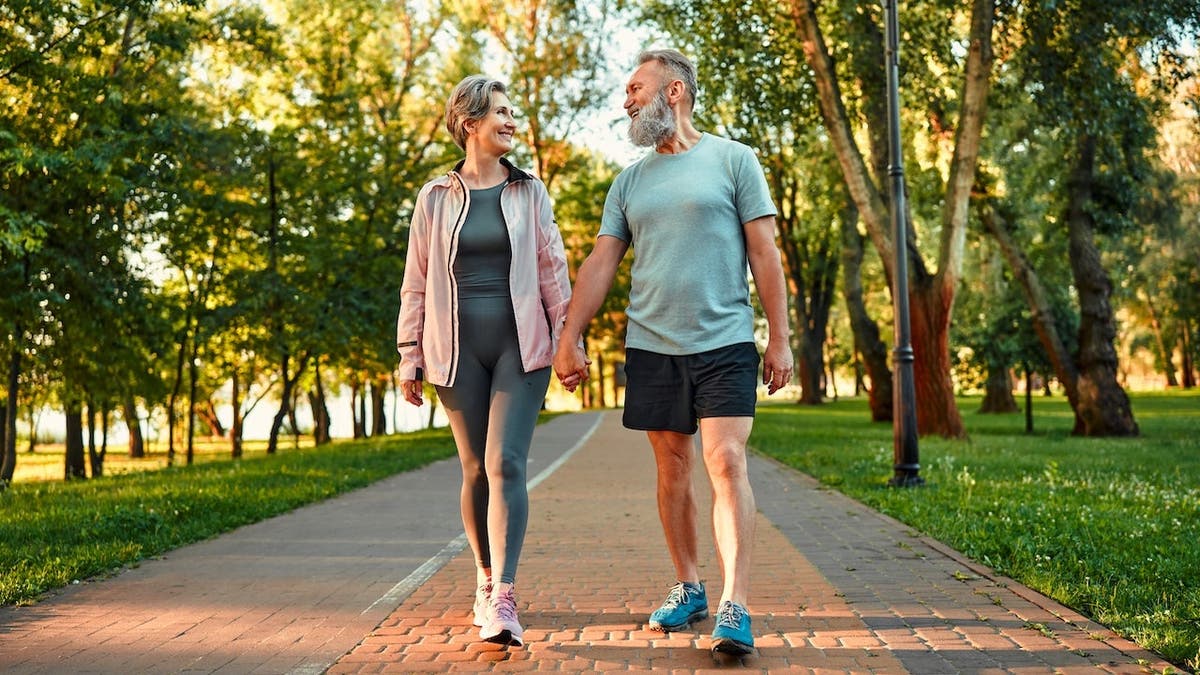
Dr. Courtney Conley and Dr. Milica McDowell, authors of Walk, highlight the vast benefits of walking for both physical and mental well-being. They describe walking as “Vitamin W,” an activity accessible to many, and explain how increasing daily steps can enhance longevity. They also discuss “movement snacks,” small bouts of activity for overall wellness.
New research indicates that a person’s usual walking pace can provide valuable insights into their health and longevity. A study in JAMA Network Open observed 4,067 adults, averaging 69 years of age in the U.K., to see if their normal walking speed was linked to mortality risk over time. Participants underwent walking tests and wore wrist activity trackers to monitor everyday walking speed.
Over nearly 12 years, those who walked faster demonstrated a lower risk of death, even when considering other health and lifestyle factors. During that period, 739 participants passed away. Beth Templin, a geriatric specialist and CEO of HouseFit Physical Therapy & Fitness, remarked that walking speed showcases how well various body systems function together, dubbing it the “sixth vital sign.” Though not part of the study, Templin shared her insight with Fox News Digital.
Templin explained that brisk walking involves multiple systems: strong legs, a healthy heart and lungs, good balance, and coordinated brain and nervous system function. A decline in walking speed can signal impending health deterioration before lab tests reveal issues.
“When walking speed starts to slip, it’s often an early warning sign that one of those systems is declining,” Templin noted.
For older adults aiming to increase walking speed and overall fitness, simply walking more may not be sufficient. Templin emphasized the importance of building strength and balance to improve speed, suggesting exercises like standing up from a chair without using hands and performing heel raises at a counter.
Experts also propose incorporating short bursts of faster walking. After warming up, one might walk briskly for a minute, slow down for two, and gradually increase duration over time. Importantly, the study suggests an association, not a direct causation, between faster walking and increased lifespan. Additional research is needed to verify the findings across diverse groups.
For further information, the researchers were contacted by Fox News Digital. Kelly McGreal, part of the lifestyle team at Fox News Digital, highlighted that walking speed may provide a unique perspective on various body systems working together.