
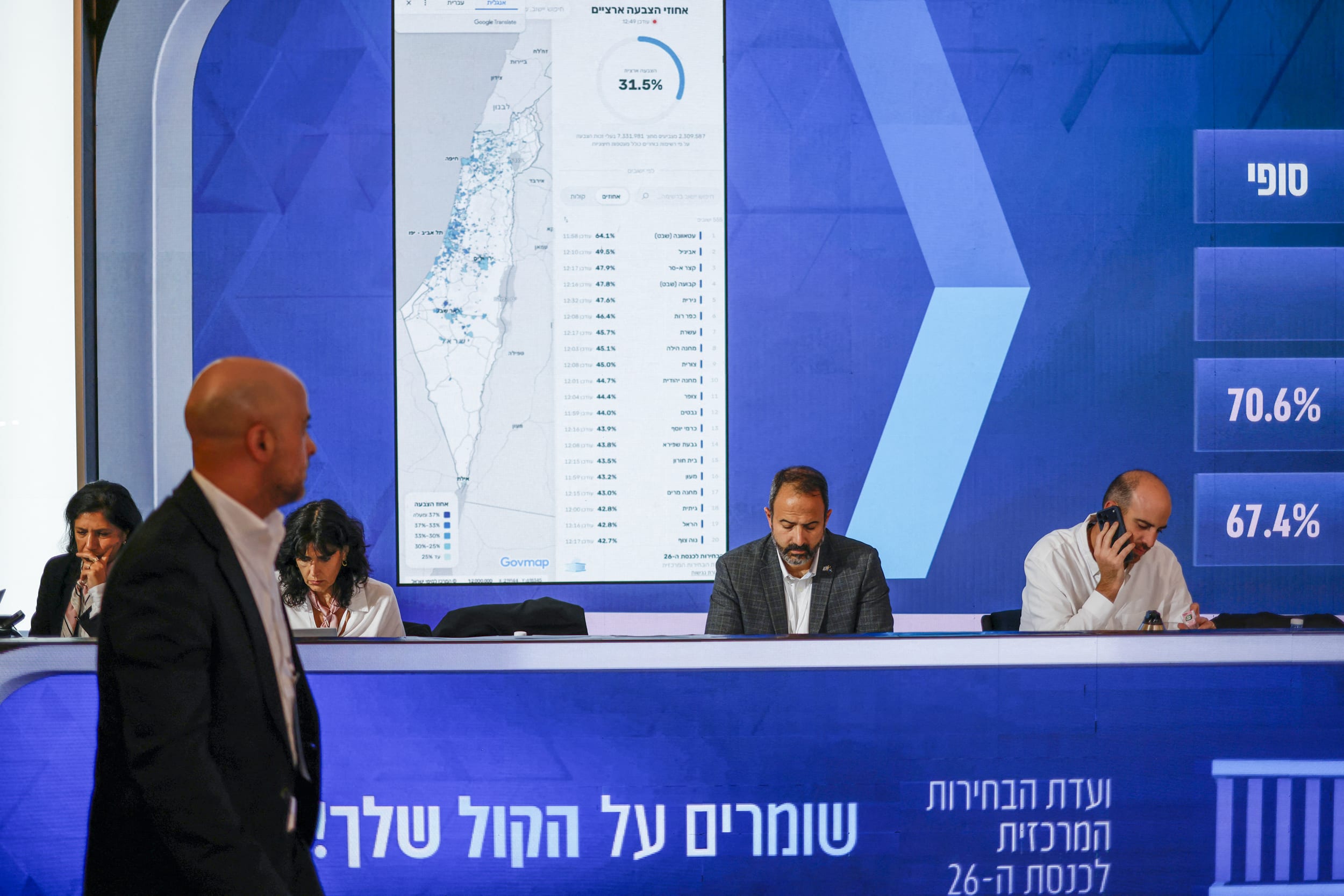
On Tuesday, Israel held national elections amidst a backdrop of allegations and high voter turnout. Prime Minister Benjamin Netanyahu faced accusations of spreading misinformation on his account, urging voters to turn out amid claims of higher Arab participation. Expert Achiya Schatz suggested some images shared by Netanyahu might be AI-generated. These claims added to the tension surrounding the elections.
Netanyahu’s main rival, Gadi Eisenkot, emerged as a significant contender. Eisenkot criticized Netanyahu’s government’s handling of security, particularly the Oct. 7 attacks. The attacks affected many Israelis, leading to widespread voter engagement.
Voter turnout reached 77.7%, the highest since 1999, as reported by Israel’s Central Elections Committee.
The high turnout reflected a sense of urgency and historical importance attributed to this election. Many parties, especially the Arab parties, saw this as an opportunity to influence future policies.
The Joint List, an alliance of Arab parties, celebrated significant turnout and hoped to play a decisive role in the next government.
The Israeli Central Elections Committee released preliminary results showing Netanyahu’s Likud party leading, but Eisenkot’s bloc was not far behind. Coalition negotiations are expected to begin post-election.
Internationally, Israel’s relationship with the U.S. and other allies remains a topic of interest. Netanyahu highlighted his ties with former U.S. President Donald Trump during his campaign, focusing on security issues.
The Israeli President Isaac Herzog cast his vote, emphasizing the democratic process. He stated, “This is the story of Israel, an incredible country and an incredible nation going to vote and deciding where is our future and where are we heading to.”
Overall, this election marks a pivotal moment for Israel amidst domestic and international challenges. The results and subsequent coalition formations will shape the country’s future direction.