
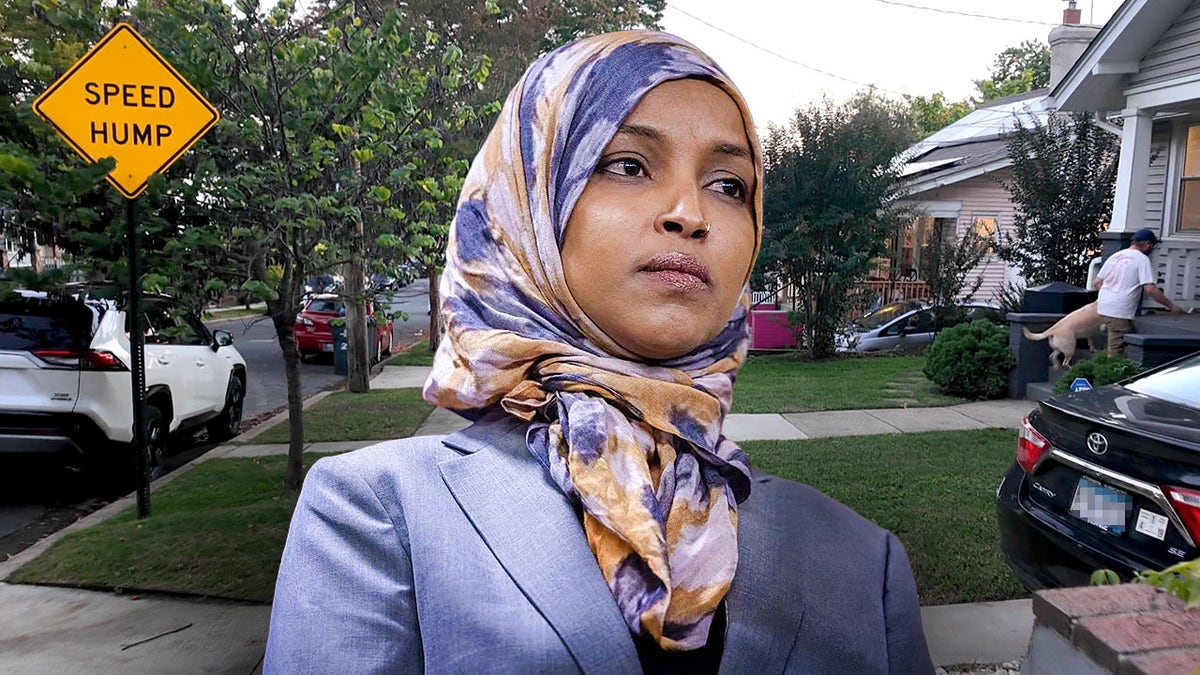
Republicans hope to see many Democrats lose re-election and leave Capitol Hill. Among those targeted is Rep. Ilhan Omar (D-Minn.), a Democrat representing a solidly blue district. Despite having won her district with nearly 75% of the vote two years ago, President Trump questions Omar’s legal status in the U.S. and her eligibility to serve in Congress.
The Department of Justice is investigating Omar for potential immigration fraud. Recently, federal authorities searched her Washington, DC home, seizing 17 items, including phones and notebooks. An inquiry lists her name as “Ilhan Nur Said Elmi, a/k/a Ilhan Abdullahi Omar.” President Trump demands her resignation, arguing she is not legally allowed in Congress.
A Fox reporter confronted Omar about her name, receiving confirmation that her name is “Ilhan Abdullahi Omar.” However, the Clerk of the House of Representatives officially lists her as “Ilhan Omar” on financial reports since 2018, predating her congressional tenure.
Though Trump calls for her expulsion, Article I, Section 5 of the Constitution grants Congress the authority to decide its membership. Some Republicans, like Rep. Morgan Griffith (R-Va.), express willingness to explore this if justified by facts. However, Griffith emphasizes expulsion should be reserved for extraordinary circumstances.
The qualifications to serve in the House are being a citizen, residing in the represented state, and being at least 25 years old. The Constitution is silent on other credentials, allowing the House scope for action.
Expulsion requires a two-thirds House vote; achieving this without a crime conviction seems unlikely. The executive branch attempting such an expulsion would face resistance due to the “Speech or Debate Clause” in Article I, Section 6 of the Constitution, protecting legislative functions.
Historically, the House rarely expels members, with only six expulsions in its history, the last being former Rep. George Santos (R-N.Y.) in 2023. More realistically, a motion to prevent seating Omar when the new Congress convenes in January might occur.
In 1968, a similar situation arose with Rep. Adam Clayton Powell (D-NY), who faced criminal investigation but met requirements to serve. The Supreme Court ruled in Powell v. McCormack that Congress cannot exclude members who meet basic service criteria.
Motions might be made not to seat Omar or controversial Members-elect after the House selects a Speaker but before swearing in. Such motions could be considered, tabled, or referred for investigation.
The McCloskey case in 1985 illustrates potential delays in swearing in, but based on Powell v. McCormack, declining to seat someone permanently would be hard to justify. The possibility of seating someone and later expelling them exists, but few are expelled, indicating its rarity.