
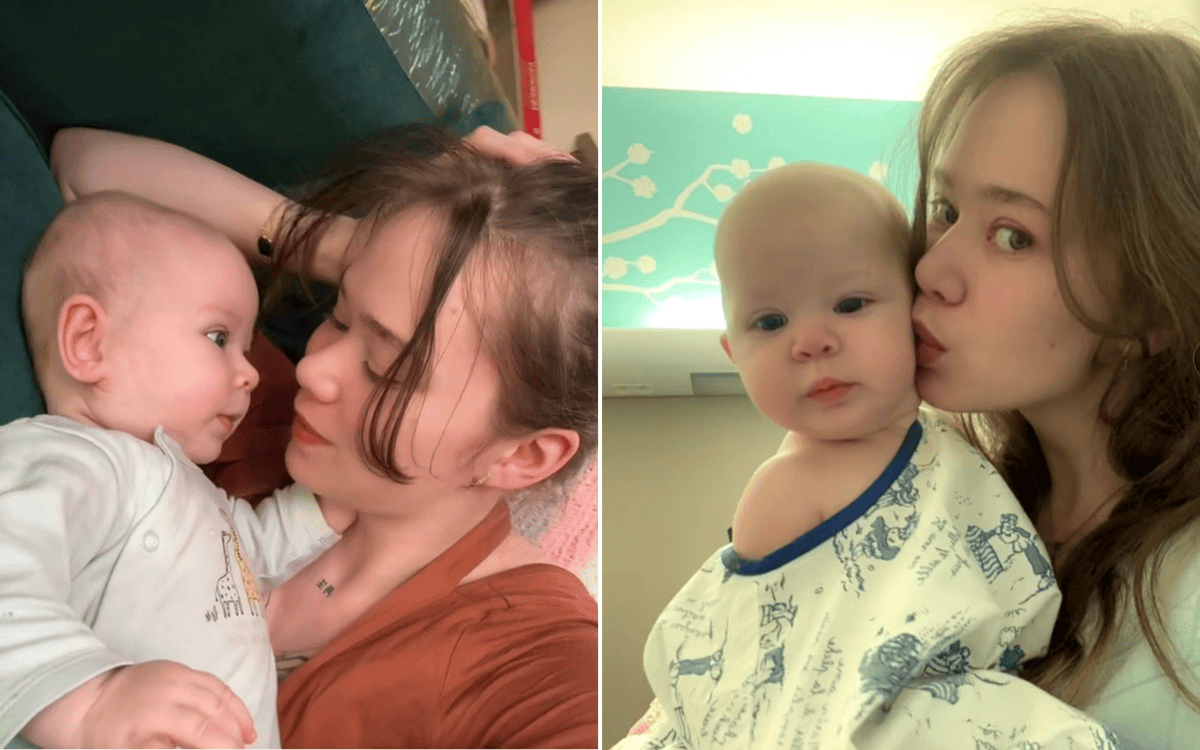
Marcelle Miller faced shock after her three-month-old daughter was diagnosed with a rare congenital condition. Until then, Miller’s pregnancy was smooth. “My pregnancy went well,” she shared with Newsweek. “A slight placental hematoma cleared up with rest. No morning sickness. It was ideal.” At 22, Miller was a thriving realtor in Europe. Her daughter arrived at 42 weeks after 21 hours of labor and only seven minutes of pushing. “Everything was perfect,” Miller recalled.
When her daughter was three months old, Miller noticed something unsettling. “I saw a small cloudy ring in her right eye,” she said. It was faint, but Miller decided to have her daughter checked. Her research led her to congenital cataracts, a rare condition where newborns have a cloudy lens in one or both eyes. In the U.S., it affects about three to four of every 10,000 births. Symptoms include vision problems and eye misalignment. Treatment often requires infant surgery, followed by glasses, contact lenses, or therapies for visual development.
Miller admitted, “I hoped it was something else.” However, a doctor later confirmed the diagnosis of bilateral congenital cataracts. Miller felt devastated. “I cried for a week,” she stated. The diagnosis seemed to threaten her daughter’s future. “As parents, we hope for a limitless life for our children,” she explained. “I had to grieve the life I imagined for her.” Congenital cataracts may result from genetic mutations or developmental issues. While the specific cause is unclear, doctors suspect a genetic mutation in her daughter’s father might be involved.
Miller quickly sought treatment for her daughter. “The condition is serious,” she said. Referred to a specialist, her daughter underwent four surgeries to remove the clouded lenses and insert artificial ones. Though she now needs visual aids such as glasses or contact lenses, her eyesight hasn’t visibly declined. “Her eyesight plateaued post-surgery but remains unnoticeable,” noted Miller. Her daughter resists wearing glasses and requires contact lenses.
Miller admits the diagnosis impacted her more than her daughter. “She got surgery young, but her condition broke me,” she confessed. Future surgeries are probable, yet Miller wishes for less invasive ones. Her hope endures that her daughter will lead “a normal, limitless life.” She encourages other parents confronting similar diagnoses to find hope in her story. “I’ve met worried, crying parents. I remember feeling scared and broken when I got the diagnosis,” Miller reflected. “Our children will have normal lives as they know no difference. We, as parents, must adjust our expectations.”