
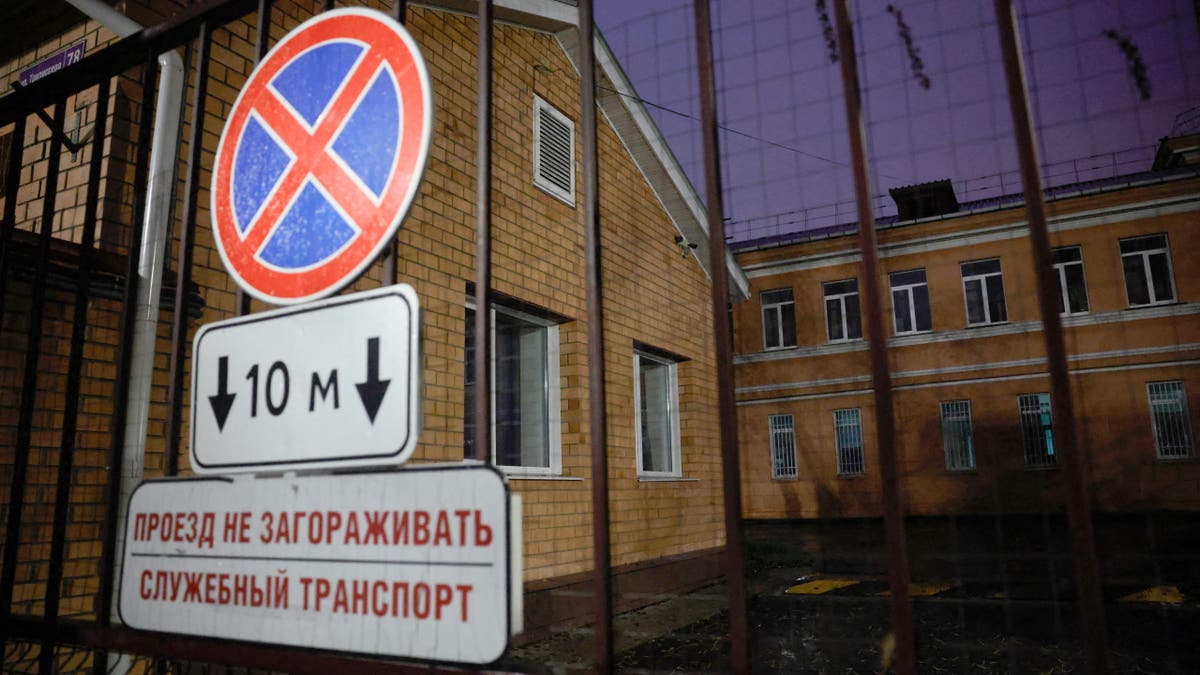
Marshall Billingslea’s experience with the Soviet biological weapons program dates back to his time as a Senate Foreign Relations Committee staffer in the 1990s. He learned firsthand about the extensive secretive efforts from one of its highest-ranking defectors, Ken Alibek. This history raises concerns for Billingslea following the October 2, 2026, death tied to Russia’s anti-plague institute.
In his discussions with Alibek, Billingslea uncovered the vast magnitude of the Soviet program, which Russia inherited and apparently continues. The mysterious researcher death at Irkutsk Research Anti-Plague Institute has renewed focus on this legacy, prompting calls for transparency from Moscow. According to Billingslea, Russia must be held accountable.
“In today’s world, Russia should not have a biological warfare program,” Billingslea emphasized, highlighting the need for Russia to disclose their lab’s activities and connections to warfare.
The U.S. government asserts that Russia still maintains an offensive biological weapons program, violating the Biological Weapons Convention (BWC), which prohibits such activities. A 2025 compliance report indicates the Soviet program has been absorbed and continues to evolve under Russia.
Although there is no direct evidence linking the Irkutsk researcher’s death to this program, the unexplained circumstances have revived concerns. Billingslea noted Alibek identified several civilian labs involved in classified work, including efforts to increase pathogens’ lethality and resistance to treatment.
“The aim was to make plague bacteria more resistant to antibiotics and combine it with toxin-producing pathogens,” Billingslea explained, highlighting Soviet researchers’ experiments to enhance the difficulty of treating infections.
Darya Shipilova, a 28-year-old employee of the Irkutsk Anti-Plague Research Institute, died from pneumonia of unknown origin, sparking quarantines and precautions. Russian officials found no evidence linking her illness to her work with pathogens, while international bodies seek further information.
Billingslea assured that the understanding of the program relies on multiple sources besides Alibek. He affirmed that the U.S. already confronted Russia over their activities during his initial interviews with Alibek, as they were aware of the locations and objectives.
Facilities identified by Alibek included several Soviet Ministry of Health labs, alleged to have dual civilian-public health and classified biological weapons roles. While Irkutsk was named, Billingslea does not recall specific developments of antibiotic-resistant plague there.
Following Shipilova’s unexplained death, pressure mounts for answers, with the World Health Organization requesting Moscow to share the cause of her fatal pneumonia. Billingslea stressed the need for this concern to be viewed as a global issue and not just a U.S.-Russia dispute.
“This is a topic of grave concern to the entire international community,” Billingslea insisted, advocating for pressure from outside the traditional U.S. alliance system, including countries like Brazil and Mexico.
In December, a meeting of the Biological Weapons Convention parties provides an opportunity to challenge Russia’s transparency. Billingslea predicts inquiries into Russia’s program during this forum.