
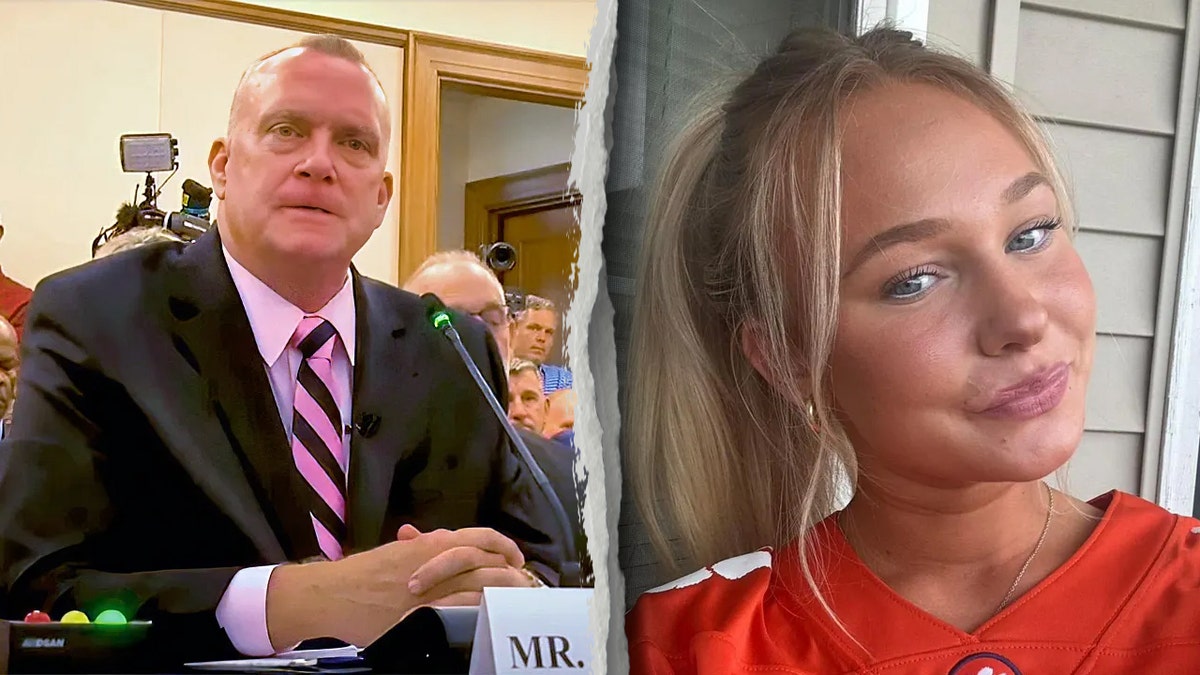
Stephen Federico, father of 22-year-old Logan Federico, is urging lawmakers to address gaps in the legal system that allow career criminals to reoffend. Logan was tragically killed during a home invasion. Her accused killer, Alexander Dickey, had a long criminal history yet avoided significant jail time.
Federico is advocating for “Logan’s Law,” a proposed bill that would establish a public database for repeat violent offenders. This initiative also seeks to improve cross-county and interstate communication and hold prosecutors accountable. The aim is to rectify the systemic issues that let Dickey remain free despite his extensive record.
This was preventable. And I’m not going to save just one more life. I’m going to save thousands,
Federico said during a crime reduction roundtable in South Carolina, attended by U.S. Attorney General Todd Blanche.
Federico highlighted broader failures in domestic criminal justice, likening them to immigration enforcement gaps. He emphasized that without Logan’s Law, addressing these challenges remains difficult.
The legislation, introduced by U.S. Rep. Russell Fry and the late Sen. Lindsey Graham, has yet to reach the House or Senate floors. Fry compared the proposal to existing public registries, stating, “Common sense works. Common sense is easy.”
Attorney General Blanche called for prompt legislative action, expressing confidence in bipartisan support. “I think the worst thing we could do is not act,” Blanche said, noting that President Trump is in favor of the proposal.
During a House Judiciary Oversight field hearing, Federico shared his daughter’s story amid escalating violent crime concerns. On May 3, 2025, Logan, a college student in North Carolina, was staying with friends in South Carolina when Dickey allegedly invaded the home.
Authorities reported that Dickey, arriving in a stolen vehicle, entered a home to steal vehicle keys and a firearm before breaking into the house where Logan was. Inside, he stole credit cards and fatally shot her. Federico described his daughter as the only witness who could identify the intruder.
Dickey’s criminal history started in 2013, with convictions for breaking and entering, burglary, grand larceny, and other offenses. Critics argue systemic leniencies allowed his continued freedom.
Federico criticized policies like reduced sentencing, stating, “What we do as a society right now is make the criminal more important than the innocent.” Logan, aspiring to be a nurse, was killed in what Federico insists was a preventable tragedy.