
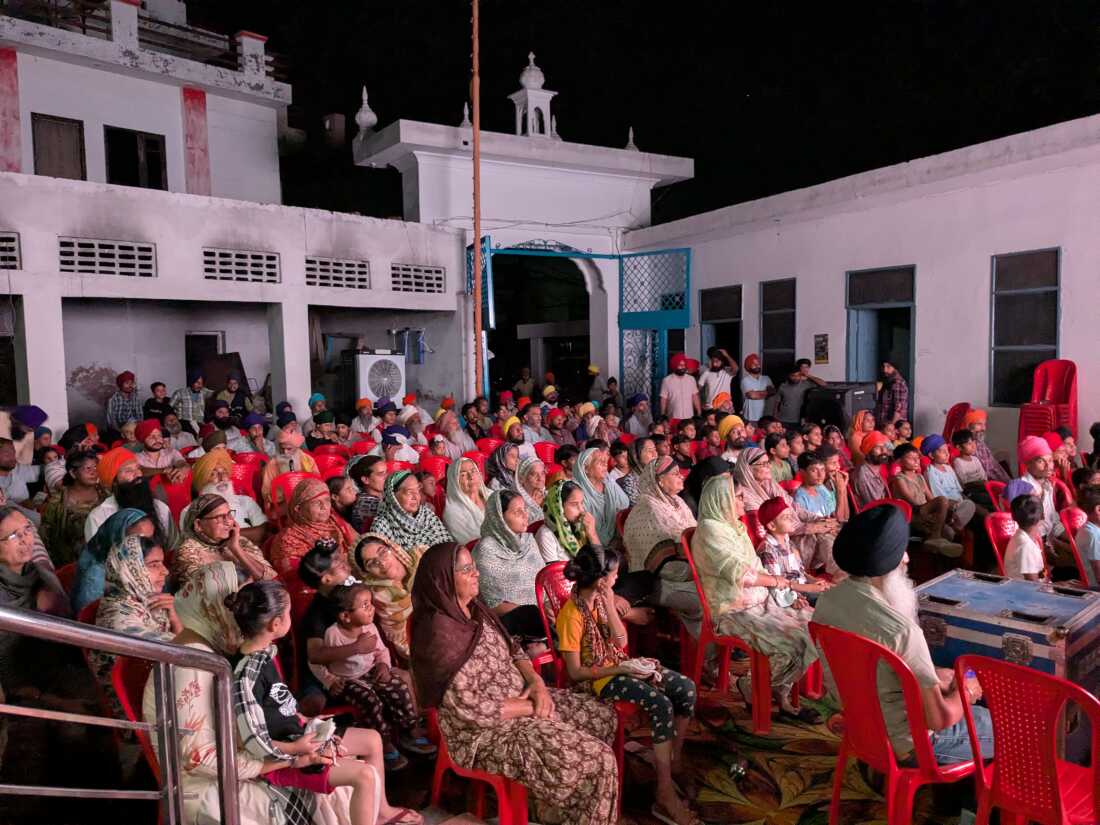
In July, Bandala village in Punjab, India, saw hundreds gather to watch Satluj, a film banned by the Indian government citing ‘national security’. The screening took place in the Sikh temple, as villagers settled in to watch a story deemed too controversial by authorities.
Men and women arrived after a day’s work on rice and sugarcane fields. Volunteers served drinks, and children enjoyed the occasion. The film, blocked from cinema release and online streaming, questioned censorship and brought the community together.
The government’s reason for banning Satluj remains undisclosed. The film, based on true events, examines Sikh history and identity. Posters across village walls advertised it, defiantly.
Satluj portrays the life of Jaswant Singh Khalra, an activist murdered for revealing illegal killings by security forces during Punjab’s violent separatist movement of the 1980s and ’90s.
After the Indian army stormed the Golden Temple in 1984, a series of violent incidents followed, including the assassination of Prime Minister Indira Gandhi by her Sikh bodyguard. These events sparked ongoing tension and violence in the region.
The government’s decision to ban Satluj provoked resistance. Across Punjab, Sikhs gathered to screen the film in defiance, using temple courtyards and public spaces. The community’s reaction showed unresolved issues still resonate deeply.
In the 1990s, many Sikhs perished in clashes with security forces. Some fled for asylum abroad. Lawyer Sarabjit Singh Verka recalls police action was brutal during this period, resorting to extreme measures without fear of reprimand.
Jaswant Singh Khalra, central to Satlujs narrative, documented these injustices. He exposed thousands of extrajudicial killings. Despite his efforts, authorities largely ignored his findings. Khalra vanished in 1995, his body never recovered.
A trial years later convicted several officers for Khalra’s abduction. Yet, the broader demand for justice remains unmet. Verka believes government reluctance to address past excesses persists.
Amid the film’s ban, director Honey Trehan recounted struggles with India’s film certification board, hinting at broader censorship issues. Despite being pulled from streaming, bootleg copies spread, fueling community screenings.
Officials fear Satluj could revive separatist sentiments, amid ongoing tensions with Sikh diaspora abroad. An official acknowledged one film is unlikely to incite immediate unrest, yet the potential remains a concern.
Film analyst Anna M.M. Vetticad criticizes the government’s view of cinema as propaganda. The narrative of Satluj, she argues, emphasizes human rights, not separatism. The government’s reaction missed the film’s essence.
Community screenings were a means to preserve memories otherwise neglected. Ranjit Singh Babbar remembers his father, allegedly killed by police in 1990. His father’s death certificate was never issued, leaving unresolved grief.
As villagers gather for Satluj, they find solidarity in the shared story. The film’s message resonates with those feeling marginalized. Khalra’s fight symbolizes hope in a democracy still grappling with its past.