
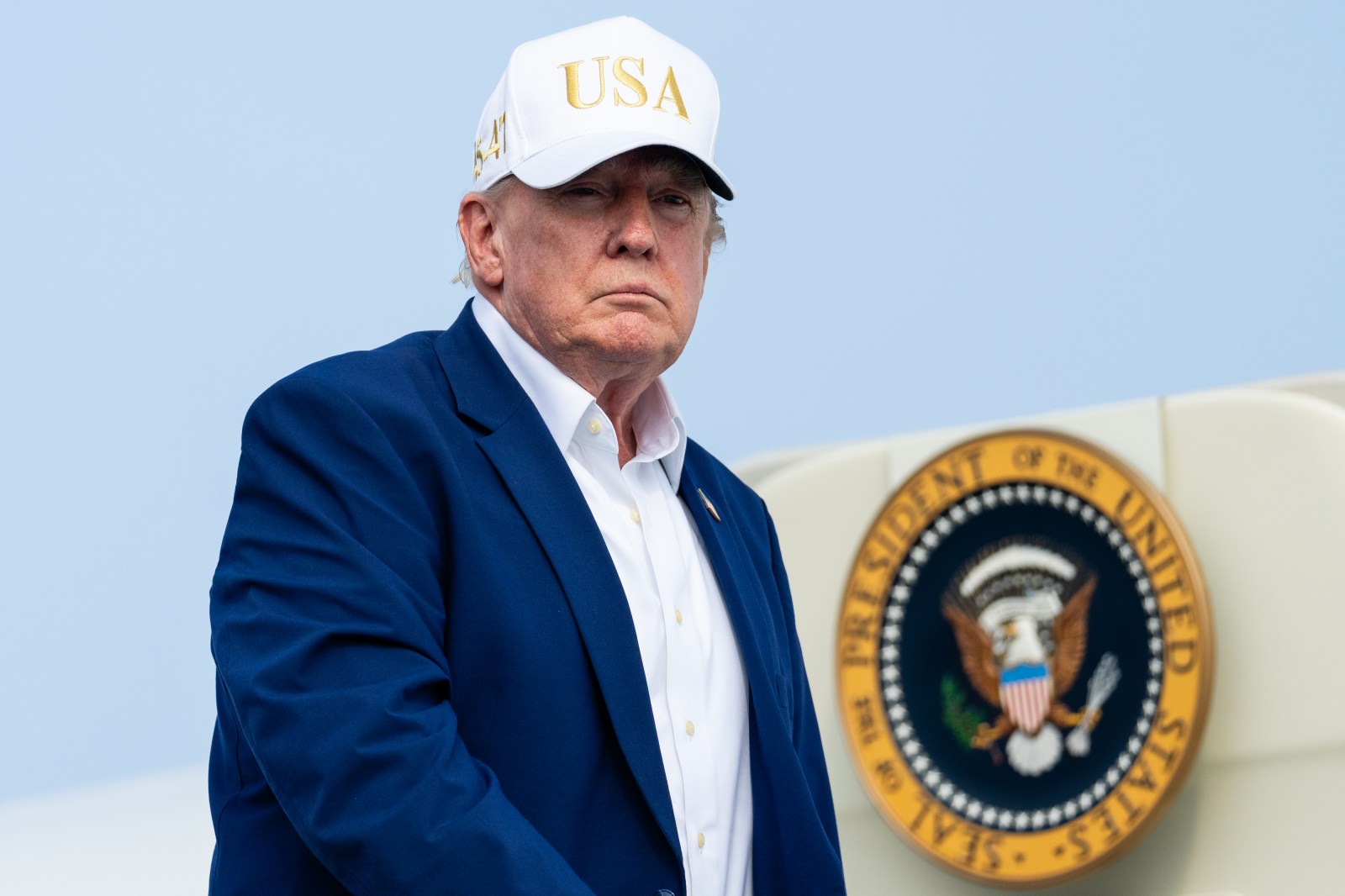
President Donald Trump provided an ambiguous response on Tuesday when questioned about potentially declaring a national emergency before the midterm elections to promote his voting initiatives. During an interview with Wayne Allyn Root on Real America’s Voice, Trump addressed inquiries regarding the SAVE America Act. This act outlines voter ID and restrictions on mail-in ballots, which the U.S. Senate has yet to approve. Trump’s frustration over the delay was apparent.
When asked about his ability to declare a national emergency, Trump replied, “Stranger things have happened. I’ll leave it at that.” Trump and his administration have consistently argued that voter ID and other measures in the bill are crucial for election integrity. He believes these are necessary for Republican success.
Opponents of the legislation argue that thousands of Americans could be barred from voting due to a lack of required identification, such as passports. Additionally, there are concerns that a national emergency declaration could lead to disputes or overturns of election outcomes.
Democratic Senate Minority Leader Chuck Schumer responded to Trump’s comments on X, stating, “Donald Trump wants to take over American elections. Senate Democrats are prepared to combat his unprecedented, illegal efforts at every turn. Your vote belongs to you. We will ensure it stays that way.”
Newsweek has contacted the White House for further comments on this matter.
Could Trump Declare a National Emergency?
The U.S. Constitution assigns states the primary role in election administration, while Congress has significant control over federal election regulations. Election-law experts largely agree that a national emergency declaration would not grant the president authority to modify state election laws, delay elections, prohibit mail voting, or impose new voter qualifications independently.
There have been reports of a draft executive order in which the president might use foreign election interference as a justification for emergency measures. Yet, even those who support the idea acknowledge that states and legislatures have jurisdiction over elections. Any attempt to implement nationwide voting rules through emergency powers would likely face immediate legal challenges.
Jeffrey Toobin, chief legal analyst for CNN, discussed on Newsweek’s The 1600 podcast how Trump might influence the midterms. Toobin pointed out that reducing mail-in voting could potentially disadvantage Republicans as much as Democrats. “It’s unclear which party benefits from mail-in voting,” Toobin explained. “Historically, Republicans supported mail-in voting, and some still believe they benefit more from it. So, the issue is not only harmful, but also puzzling.”
Where Does the SAVE America Act Stand?
The SAVE America Act (Safeguard American Voter Eligibility Act) has not been approved by the Senate and is not yet law. While the House has passed the bill several times, Senate Republicans have failed to garner enough support to finalize it.
The legislation mandates proof of U.S. citizenship to register for federal elections and introduces a federal photo ID requirement for voting. Earlier this year, Republicans managed to initiate Senate debate on the bill, though this did not ensure its passage.
On August 7, Republican Senate Majority Leader John Thune, Trump, and conservative senators agreed to postpone action on much of the SAVE America Act until after the August recess due to insufficient support. Senate Republicans are now considering a smaller vote focused solely on the photo ID requirement, as reported by The Hill.
Contact Newsweek editors on this story: Jason Lemon and Geoffrey Rowland