
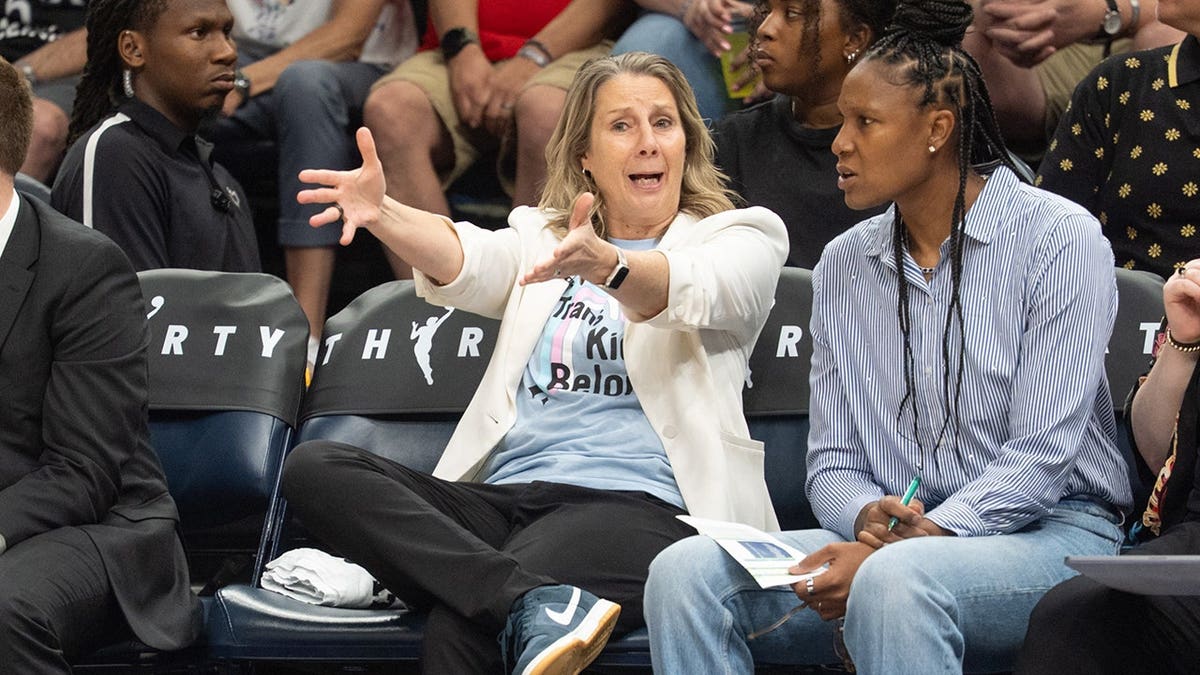
Minnesota Lynx head coach Cheryl Reeve made a bold statement during a game against the Indiana Fever at Target Center. She wore a shirt reading ‘Trans Kids Belong’ while coaching. This action was seen as a response to remarks made by Sophie Cunningham about transgender athletes.
Before the game, Reeve spoke about her belief in inclusion and protecting trans kids. She expressed that every child has the right to participate in sports. These comments coincided with a rally supporting Cunningham’s views outside the arena.
Cunningham voiced concerns about girls and women competing against biological men and sharing locker rooms. She emphasized protecting young girls in sports and locker rooms.
Reeve’s shirt suggested a broader message, implying exclusion of transgender children entirely, although Cunningham clarified she had never expressed hatred towards transgender people. Her focus was on participation in female sports and locker access.
Reeve acknowledged the complexity of the issue, especially involving scholarships and Olympic spots. She encouraged finding common ground, as mentioned before the game.
The Lynx denied credential requests from Fox News Digital and OutKick to cover the game. Despite applying well before the deadline, the Lynx didn’t specify the denial reason. This decision sparked reactions on social media, where some celebrated the denial, arguing local reporters deserved priority.
Reeve’s decision to wear the shirt opened the floor for questions beyond basketball. Critics argued if reporters should only focus on basketball, actions like Reeve’s blurred those boundaries, making the social issue part of the narrative.
Further queries to the Lynx about Reeve’s shirt and its intended message went unanswered. Reeve potentially could have clarified that the shirt’s statement wasn’t directly related to Cunningham.
This incident highlights a recurring theme: social statements held significance on the sidelines, while challenging questions met resistance. Reeve exercised her right to make a statement. Simultaneously, the Lynx exercised their discretion over media access. The resulting message was a reminder of controlled dialogues within platformed sports environments.