
Historic Agreement on Gaza Disarmament
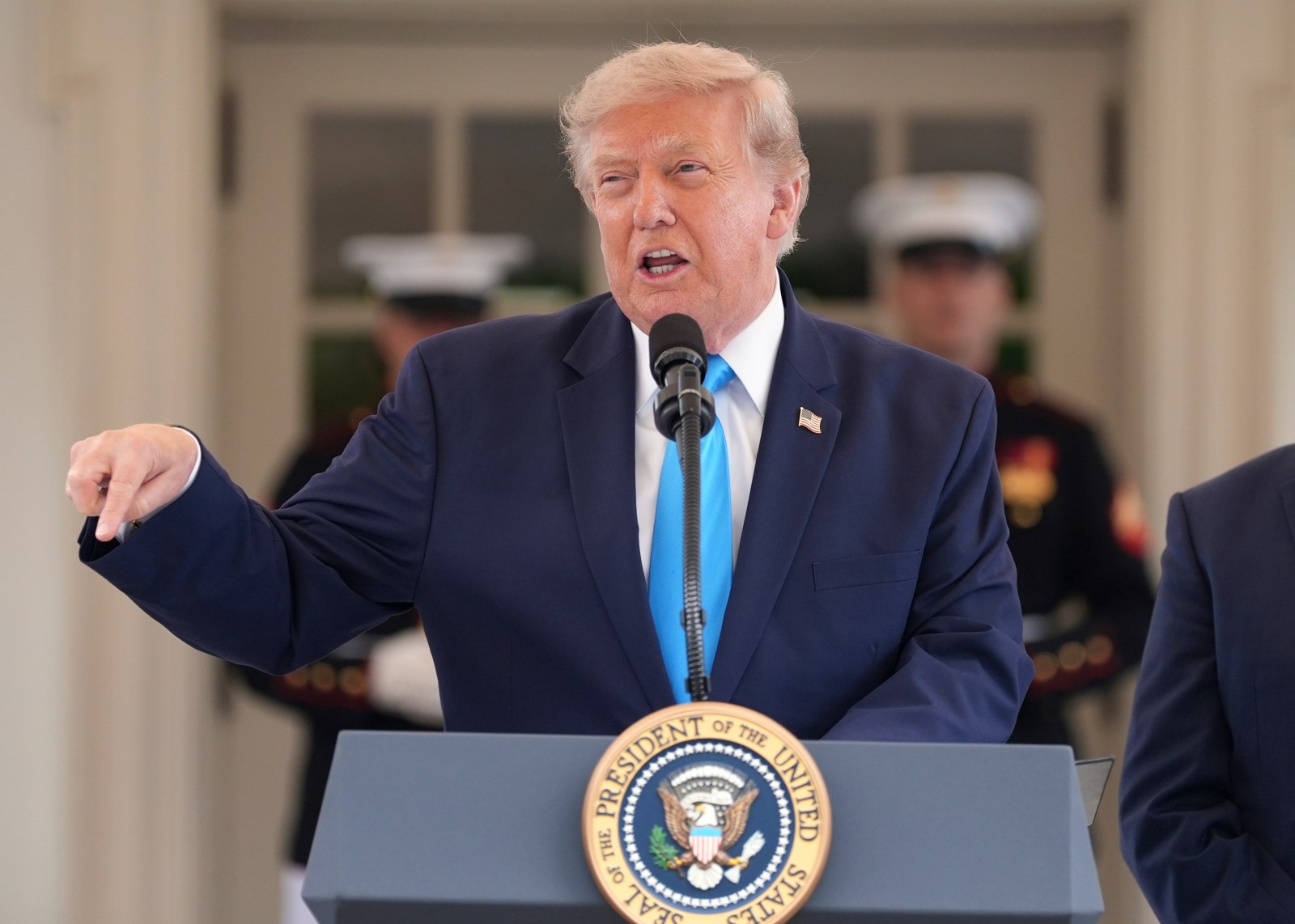
President Donald Trump recently declared that his newly formed Board of Peace has achieved a historic agreement aimed at the complete disarmament of Hamas and other armed groups in the Gaza Strip. This marks a significant foreign policy milestone for the administration and is part of a broader 20-Point Plan. However, Hamas has not publicly confirmed or commented on this announcement.
Political scientist Rajan Menon expressed skepticism, noting Hamas’ previous stance. He said, “Hamas has not disarmed, nor agreed to disarm under the October 2025 ceasefire, unless accompanied by an Israeli withdrawal from Gaza. Even then, weapons would not be surrendered to the Israel Defense Forces but to a technocratic government.”
New Governance Framework
Trump stated the agreement would lead to a new Palestinian government prioritizing the needs of its people and ensuring Gaza is no longer a launch site for attacks against Israel. “Israel will receive the security it deserves,” Trump said.
Under this plan, Israeli forces are set to withdraw from Gaza as disarmament proceeds, with security responsibility transitioning to an International Stabilization Force working with a new Palestinian police force.
Ongoing Negotiations and Mediation
Hamas leaders have recently been in Cairo, Egypt for discussions with mediators from Egypt, Qatar, and Turkey. Having announced the dissolution of their governing body in Gaza, Hamas reports progress in these talks.
Trump expressed gratitude to Egypt, Qatar, and Turkey for their mediation. He credited his administration’s efforts for achieving this breakthrough, contrasting it with the conflict-ridden and crisis-laden conditions of a year earlier.
Challenges to Ceasefire and Disarmament
Despite the announcement, questions remain about the full execution of disarmament and the role of international monitors. Israel has breached the ceasefire repeatedly. According to Gaza health officials, over 1,200 Palestinians have died from Israeli attacks since the October 2025 ceasefire began.
Understanding the Board of Peace
The Board of Peace (BoP), established under Trump’s leadership, aims to guide the transition in Gaza, focusing on administration, security, and economic rebuilding. Chaired by Trump, it includes notable figures like U.S. Secretary of State Marco Rubio and former UK Prime Minister Tony Blair.
The Board oversees the National Committee for the Administration of Gaza (NCAG), a technocratic body handling international funding, deployment of the International Stabilization Force (ISF), and redevelopment tasks.
Trump’s 20-Point Plan
Trump unveiled his 20-Point Plan in September 2025 as a roadmap for a ceasefire, hostage release, disarmament, and new oversight structures.
Phase One (Late 2025):
- Focus on humanitarian aid and security milestones, such as freezing conflict lines and hostage exchanges.
Phase Two (2026):
- Centric on governance and security transition, such as establishing the Board of Peace and the NCAG for local leadership.
- Deploying ISF alongside newly trained local police to oversee demilitarization and Israeli withdrawal.
Ongoing Conflict and Humanitarian Needs
The announcement follows months of diplomatic efforts to resolve the conflict that surged after October 7, 2023. Despite temporary ceasefires and prisoner exchanges, clashes persist. Gaza faces a severe humanitarian crisis, with many reliant on international aid amid widespread infrastructure damage.
Security remains fragile, as mediators work to ensure aid delivery, establish safe zones, and prepare for international peacekeepers to replace the Israeli military presence. Within the past day, Gaza’s Ministry of Health reported six deaths and 34 injuries due to continuing violence.