
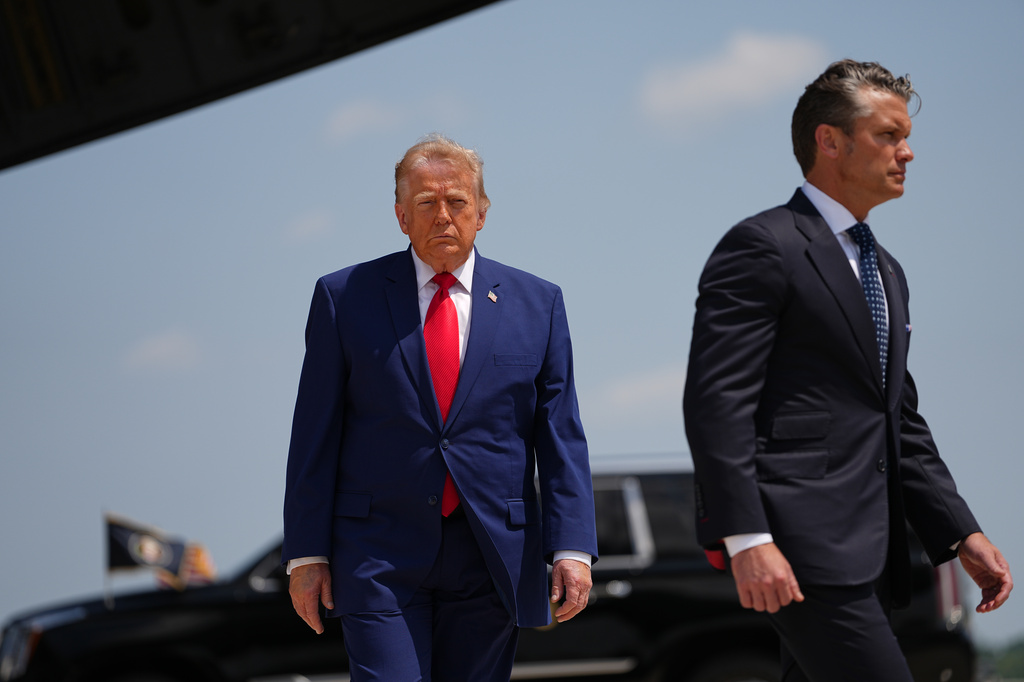
President Donald Trump, alongside Secretary of Defense Pete Hegseth, attended the dignified transfer of four U.S. service members killed recently in the Middle East. This event took place at Dover Air Force Base. In 1969, Life magazine published a controversial feature showing 242 young men who died in Vietnam within one week. This stark presentation of the war’s human cost challenged the Pentagon’s focus on kill-counts as indicators of victory. The portrayal shifted public perception, highlighting the loss of American lives over enemy body counts.
During World War II, newspapers reported the names and locations of the deceased, prompting public pressure on leaders like Franklin Roosevelt and Harry Truman to end the conflict swiftly. Similar trends are resurfacing, as the Trump administration has reintroduced kill counts while downplaying certain casualties. The Pentagon recently adjusted the number of killed in action from 18 to 14, claiming the deaths occurred during a cease-fire and were not casualties of war, despite Iran’s involvement.
Trump’s presence at the dignified transfer of these soldiers was, predictably, used as a photo opportunity. He later attempted to justify the war by comparing troop losses to those in Vietnam, Iraq, Afghanistan, or Korea. His messaging implied that fewer deaths in this conflict, one he initiated, are a sign of success. Yet, questions arise regarding how subsequent casualties will be recognized, particularly if they continue to occur during conflicts with specific nations.
Military personnel have long been used as political tools, yet recent policies highlight a growing trend of minimizing casualty lists and downplaying injuries. Such actions obscure the realities of war, shifting public focus only to politically expedient narratives.
Trump’s track record includes comments disparaging military figures and missteps like his disputed statements about the war dead and his campaign’s insensitive dealings at Arlington Cemetery. The mishandled Afghanistan withdrawal under President Joe Biden drew rightful criticism. Republicans largely focused on the casualties from that exit, seemingly overlooking the thousands lost in the lengthy conflict.
Accountability for war casualties lies with the sitting commander in chief, a responsibility Trump appears reluctant to accept. The Pentagon’s initial exclusion of certain names reflects poorly on the administration’s handling of the conflict’s human toll. The memories of fallen soldiers require respect and acknowledgment, regardless of political implications.
Reflecting on past experiences, veterans have shared insights into the importance of recognizing and valuing the safety of returning soldiers. The sacrifice of those who don’t return must be honored, free from political agendas. The civilian responsibility is to demand that all war casualties are recognized and that their lives are never reduced to mere statistics.
Joslin Joseph, the author of this piece, is a decorated Marine veteran, and his insights stem from personal experiences and recognition in military reporting and commentary.