
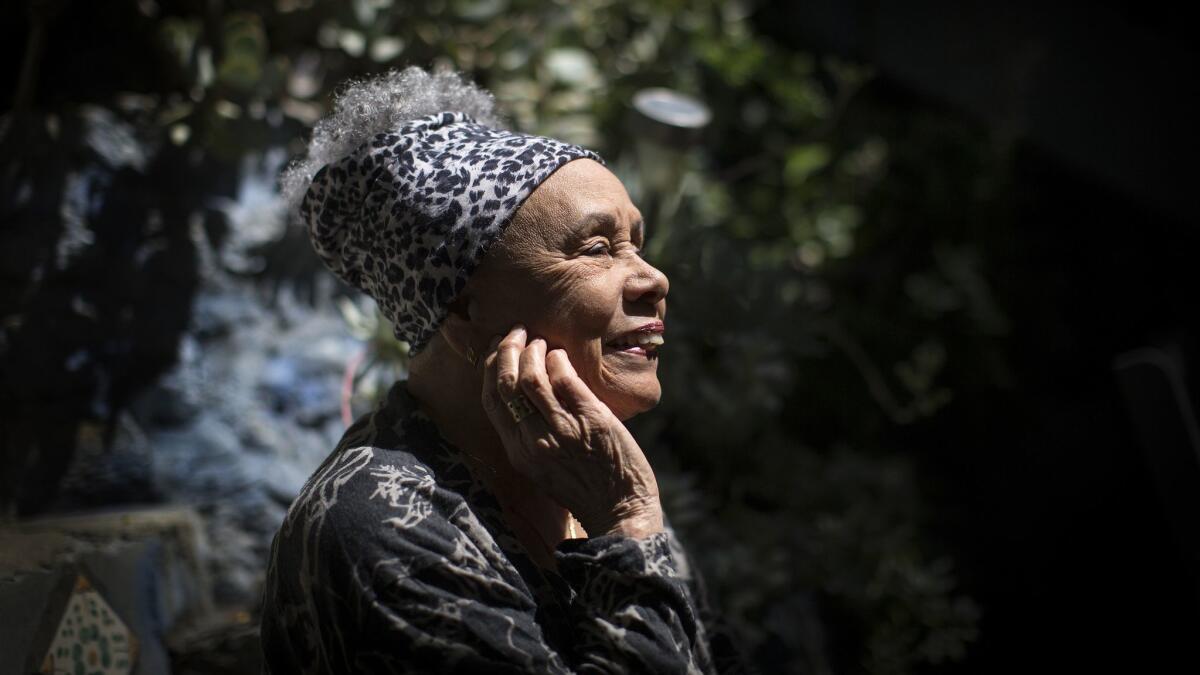
Betye Saar, a pioneering artist from Los Angeles, transformed racially offensive objects into powerful works of art. She used items like Sambo dolls and ceramic mammies to explore and critique the history of race in the United States. Saar passed away in her sleep at the age of 99 in Los Angeles, as confirmed by her gallerist, Julie Roberts, and publicist, Hannah Gottlieb-Graham.
Artistic Impact and Vision
Throughout her career, Saar influenced generations of artists with her assemblage art. She was known for her unique approach, finding objects at garage sales and flea markets to make collages that addressed the complex history of racism, slavery, and personal themes like family and spirituality. In a documentary from the 1970s, Saar spoke about her process, emphasizing the energy and transformation of recycled items.
Rising to Prominence
Her breakthrough came in the 1970s with “The Liberation of Aunt Jemima,” a small assemblage that challenged racial stereotypes. It was first exhibited at the Rainbow Sign community center near the Black Panthers’ headquarters. This work aligned her with the Black Arts Movement and led to a solo exhibition at the Whitney Museum in New York. Activist Angela Davis credited her work with impacting the Black women’s movement.
Personal and Historical Context
Saar was born Betye Irene Brown in Los Angeles in 1926. Her family moved to Pasadena after her father’s death, where art was a significant part of her upbringing. She initially worked as a designer before shifting to fine arts influenced by African and Caribbean styles. Trips to Chicago’s Field Museum and Haiti enriched her interest in cultural magic and the power of objects.
Transforming the Narrative
Saar’s work often featured charged imagery to bring African American history and struggle into focus. She addressed stereotypes, empowering figures like the Black mammy by arming them with weapons, transforming images of servitude into symbols of power. This included a piece where a smiling mammy became a Molotov cocktail.
Multifaceted Influence
Her influence extended across multiple art forms, from prints to three-dimensional works, shaping figures like Houston Conwill and Senga Nengudi. Her work is held in over 80 international museums, and she continued to create new pieces well into her 90s.
Legacy and Continued Inspiration
Saar’s legacy persists through exhibitions and her establishment of the Betye Saar Legacy Group in 2025, which aims to preserve her archives and inspire future artists. Her biography by Zoé Whitley is anticipated in 2027. Saar is survived by her daughters and grandchildren, all carrying forward her artistic spirit.