
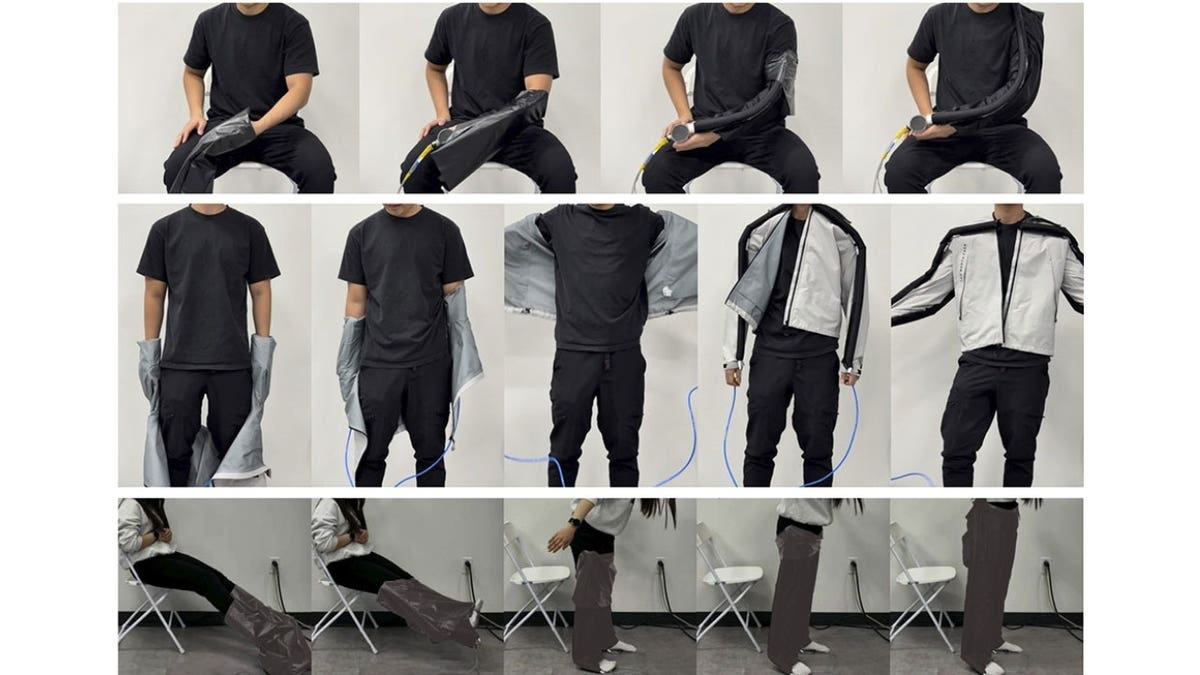
Researchers from South Korea’s KAIST and Stanford University have introduced a novel invention: self-dressing clothes featuring soft, air-powered robots within the fabric. This innovation holds the potential to simplify dressing for those with mobility issues.
How the Self-Dressing System Works
The system, known as SWAG (Self-Wearing Adaptive Garment), integrates flexible robotic tubes into garments. These tubes inflate with air pressure, enabling the clothing to move along the body. This design reduces friction, making dressing smoother and more comfortable.
Impact on Independence
Getting dressed is a fundamental daily activity, crucial for maintaining independence. For individuals with limited mobility, this technology could offer more autonomy by reducing reliance on caregivers.
Challenges in Dressing
Dressing involves various movements, such as reaching and shifting weight. These actions can pose difficulties for those with arthritis or recovering from surgeries. The self-dressing clothes aim to alleviate such challenges.
Origin of the Concept
KAIST researcher Nam Gyun Kim sparked the idea while riding his bike in the rain. He envisioned a raincoat that could put itself on, leading to the concept of self-dressing garments.
Testing and Efficiency
In tests, the system takes between 10 and 21 seconds to position various garments like jackets and pants. It relies on physical design, which may simplify hardware and improve safety.
Potential Applications
The technology could benefit older adults, disabled individuals, and rehabilitation patients. It may also find applications in industrial settings where quick dressing is essential, such as in cleanrooms and emergency scenarios.
Future Developments and Challenges
While promising, the system is still in the research phase. Developers must address issues like garment fit, washing, and portability. Clinical trials are necessary to ensure effectiveness for those with mobility problems.
Summary and Prospects
Although not yet available for consumers, this research highlights a future where assistive technology integrates with clothing to maintain independence. Further testing and development could make self-dressing clothes a reality, providing more autonomy for impacted individuals.