
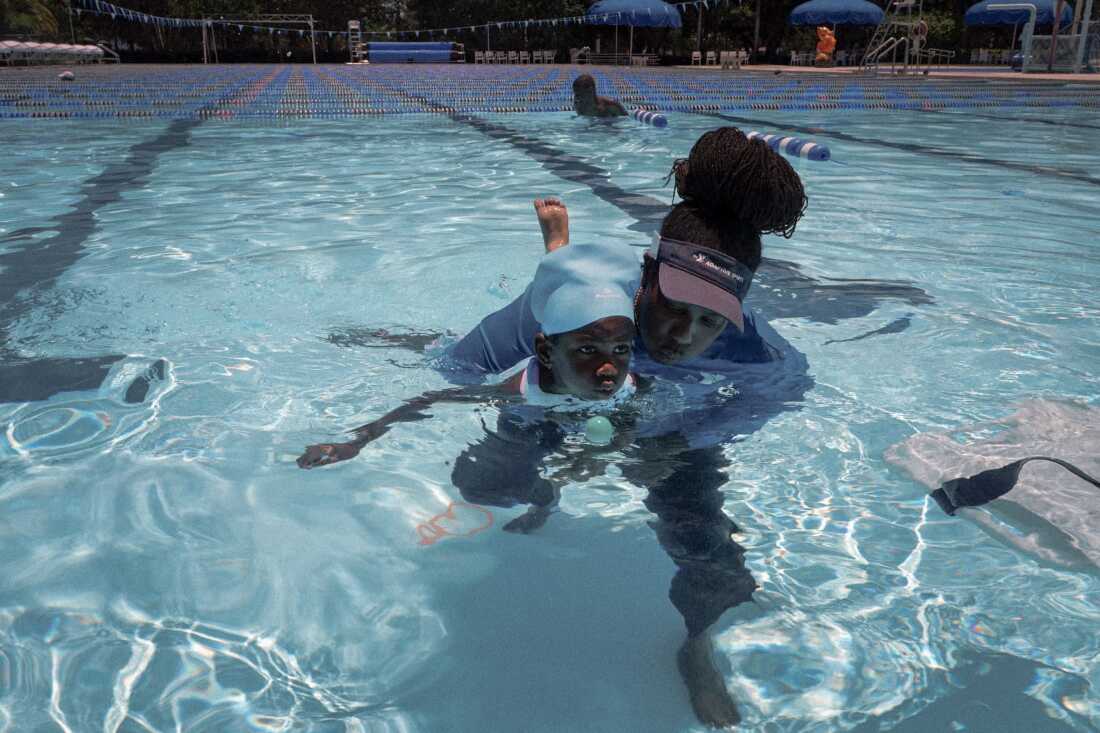
WESTON, Fla. — Mackenzie Wesley, 5, beams with joy as she enters her swim class. Her favorite Lilo & Stitch swimwear highlights her love for water. Her dad, Steven Wesley, notes her enthusiasm for both pools and the beach, reflective of many kids with autism who find sensory satisfaction in water.
Mackenzie’s mother, Brittany Bucknor, highlights a concerning fact for Florida families: the heightened drowning risk for children with autism. A 2017 study from Columbia University found that these children face a 160 times greater risk compared to others. In Florida, most drowning incidents occur in backyard pools, exacerbated by autistic children’s tendency to wander combined with an attraction to water.
To counter this risk, Mackenzie’s parents enrolled her in Swim Buddies, a program by the YMCA of South Florida tailored for children with disabilities. Florida aims to address high drowning rates by prioritizing autistic children, aged 1-7, for subsidized swim lessons through a voucher program starting July 1.
Florida state Rep. Anna Eskamani helped orchestrate the voucher change, emphasizing preventable tragedies linked to autism and water. The voucher, worth about $200, covers up to eight swim lessons. Health care providers will inform new parents about drowning prevention and the program.
The YMCA of South Florida hosts one of the largest adaptive recreational programs, with a significant number of participants diagnosed with autism. Garland Jones, an integral part of this initiative, underlines the importance of a whole-person approach to teaching, focusing on physical, emotional, and social needs. Individualization in lessons, rather than group classes, characterizes the program’s philosophy.
Children’s needs dictate class structure. For instance, those fearful of water receive a gentle introduction, while sensory toys like sparkly ducks serve as both rewards and engaging tools. This approach has significantly improved swim skills in kids over just five or six sessions, according to research by Tania Santiago Perez from Florida International University.
Parents witness the program’s success, with their children mastering fundamental water safety skills and social integration. They express optimism about the voucher program facilitating affordable swim lessons amid high expenses for therapeutic support.
However, the increase in demand unveils a concern: a shortage of trained instructors to meet the needs of autistic children. Alison Bregman-Rodriguez of the YMCA highlights challenges in balancing demand and lesson quality, while funding remains a constant pressure to sustain such programs.
Despite obstacles, Swim Buddies continues to forge a path for children like Mackenzie, who recently enjoyed a milestone by attending her first pool party. Her progress promises safety and confidence in pursuing her love for water, which Garland Jones finds deeply fulfilling.