
President Donald Trump’s recent renovations in the White House Rose Garden have captured attention. These changes, including transforming the lawn into a patio, are the latest in a series of transformations of this iconic space.
Historic Changes in the Rose Garden
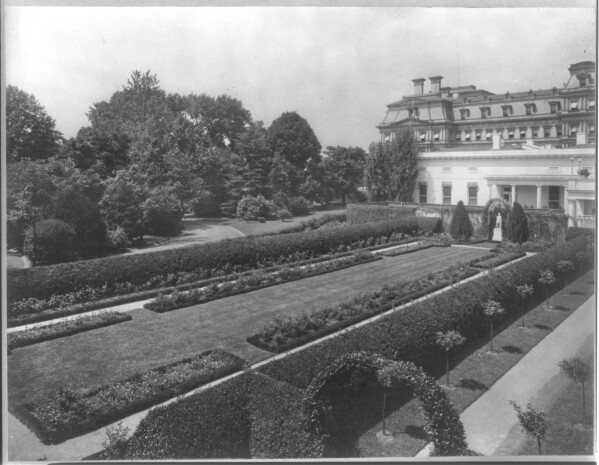
The Rose Garden has undergone several modifications through the years. Presidents and first ladies have continually altered its design. The garden was first established in 1913 by Ellen Wilson, spouse of President Woodrow Wilson. She collaborated with landscape architect George Burnap, replacing Edith Roosevelt’s Colonial Garden with a new design. Prior to this, the area housed greenhouses.
For almost fifty years, the original Rose Garden design largely stayed intact. This changed in 1961, when President John F. Kennedy and first lady Jacqueline Kennedy initiated a redesign. They enlisted the help of Rachel “Bunny” Mellon, a horticulture expert, who worked with landscape architect Perry Wheeler and White House Head Gardener Irwin Williams. They aimed to create a space suitable for press conferences and other official events. By the following year, the new garden was installed.
Mellon’s Influential Design
Mellon focused on an expansive central lawn, inspired by a scene from Lewis Carroll’s “Alice in Wonderland.” Magnolia trees accented each corner of the space. Roses were surrounded by culinary herbs, bulbs, seasonal annuals, and young crabapple trees. The garden quickly evolved into a venue for significant presidential speeches.
Mellon’s classic style favored muted tones. However, the choice of crabapple trees proved problematic over time. As the trees grew, they shaded the roses they were intended to enhance. In 2003, some crabapple trees were removed for this reason. Meanwhile, other perennials were regularly added and replaced, as well as efforts to manage the boxwood blight disease affecting the shrubs. Challenges continued with drainage issues that required frequent lawn replacements.
The 2020 Restoration
In 2020, First Lady Melania Trump commissioned a restoration to resolve these issues, aiming to return the garden to its 1962 aesthetic. The project, executed by Perry Guillot, Inc. and Oehme van Sweden & Associates, involved relocating the crabapple trees and augmenting the garden with pastel-colored roses. These included notable varieties such as the “White House Rose” and “JFK Rose.” Infrastructure was improved with electricity for broadcasts, and 36-inch-wide limestone walkways were installed for wheelchair access.
Blight-resistant NewGen boxwoods replaced the original shrubs. These steps marked a significant renewal for the garden.
A New Chapter with President Trump
In 2025, President Trump introduced another revamp, replacing the central lawn with a white limestone patio. The design included solar-powered lighting, tables, umbrellas, and statues of historical figures such as George Washington. Trump has utilized the space for events, referring to it as the Rose Garden Club. The revitalized garden continues to be a vibrant setting with its array of blooming roses.
For more insights and updates on gardening, consider exploring resources like Jessica Damiano’s gardening columns. She also offers the Weekly Dirt Newsletter which provides practical gardening tips.