
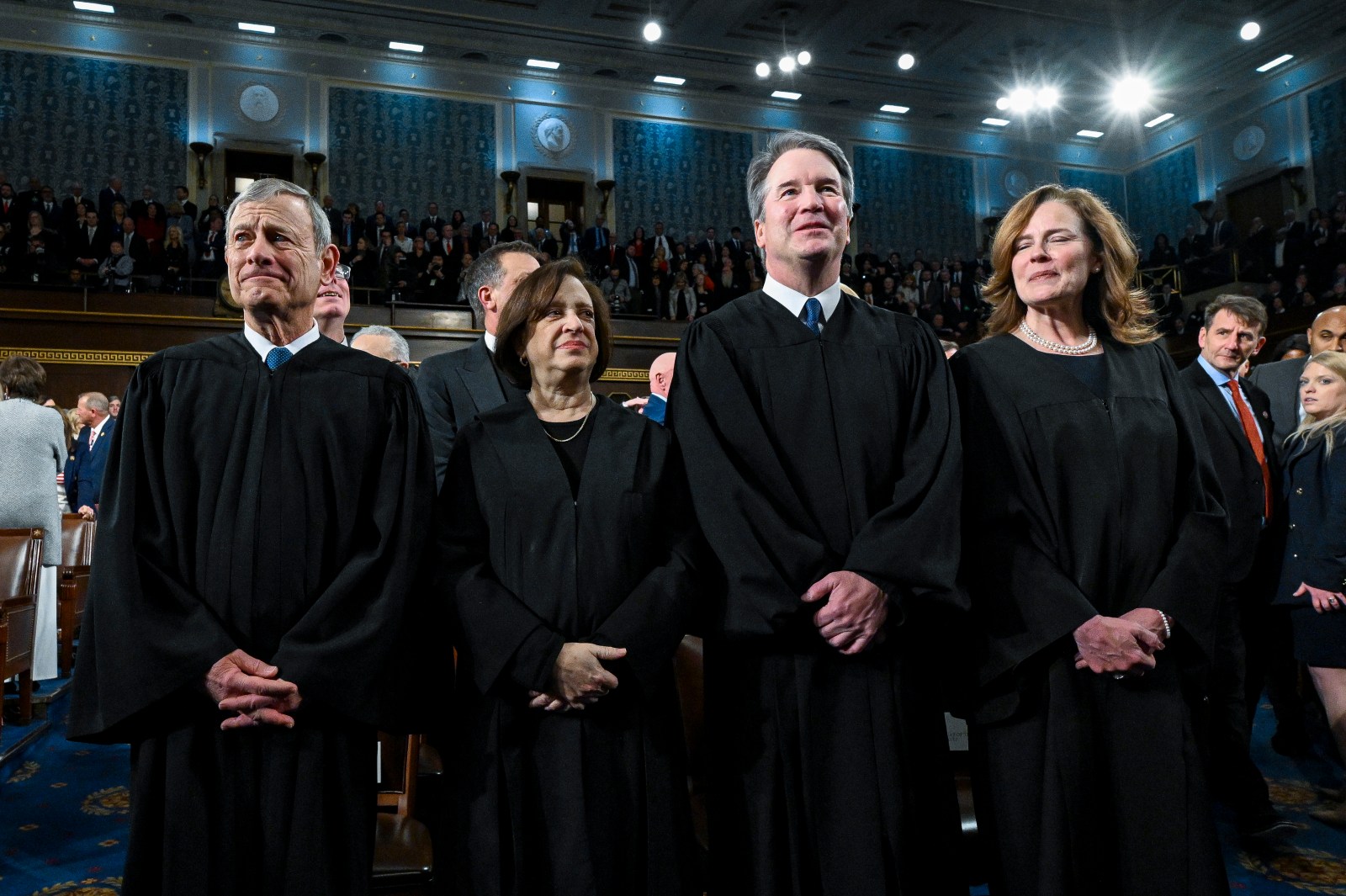
The Supreme Court is nearing the end of its term, poised to deliver significant rulings that could redefine presidential authority under Donald Trump. These decisions, expected by early July, encompass key areas like immigration policy, the independence of federal agencies, and election rules. Their outcomes may influence political dynamics ahead of the midterm elections.
Trump’s Power Under Examination
Central to the current docket are cases that scrutinize presidential power. Notably, Trump’s attempts to dismiss officials at the Federal Reserve and the Federal Trade Commission are under review. These disputes challenge established limits requiring presidents to show cause for removal from independent agencies. The court’s conservative majority has already shown some sympathy towards increased presidential control. A ruling favoring Trump could diminish these protections, potentially increasing future presidential influence over such bodies. Conversely, a decision against Trump would uphold existing limits.
Birthright Citizenship Debate
Attention is also fixed on the ruling concerning Trump’s effort to restrict birthright citizenship, which hinges on interpretations of the 14th Amendment. Lower courts have deemed Trump’s policy likely unconstitutional. If the Supreme Court permits the policy, it might overturn over a century of precedent. Rejection would significantly impact Trump’s immigration agenda. Trump anticipates an adverse ruling, reflecting uncertainty about the case outcome. Polls reveal Republican division on the matter, with 44% supporting birthright citizenship according to last month’s Associated Press-NORC survey.
Focus on Election Rules
The Supreme Court’s decisions will directly affect how Americans vote. A key case questions whether mail-in ballots must reach election offices by Election Day or can be counted if postmarked timely but received later. Conservative skepticism during deliberations suggests that stricter national rules might emerge. Another case concerns regulations on campaign spending coordination, linked to Vice President JD Vance and endorsed by Trump allies. This outcome could transform campaign financing and redefine political spending’s free speech implications.
Transgender Athletes Case
Another pivotal case debates whether states can ban transgender athletes from participating in girls’ school sports. The court’s conservative majority showed a tendency during discussions to uphold such laws, potentially setting a precedent for similar statutes nationwide. A contrary decision might broaden federal protections for transgender students, affecting civil rights in education.
Surveillance and Privacy Concerns
The Supreme Court is also examining a case about “geofence” warrants. This investigative tool gathers phone location data near crime scenes to identify potential suspects. Detractors view it as an unconstitutional broad search, while proponents consider it essential for serious investigations. The ruling could redefine digital privacy boundaries as law enforcement increasingly utilizes location data.
Mixed Ruling Patterns
This term shows varied outcomes for Trump. While some immigration-related decisions favor the administration, other policies like the high-profile tariffs case have been rejected. This unpredictability makes forecasting the final rulings challenging. Remaining decisions will indicate if the court is broadening presidential power or maintaining existing restrictions.
Future Implications
The Supreme Court will continue issuing opinions until early July. These pivotal rulings will influence not only contested Trump-era policies but also define executive authority boundaries for future administrations. As these cases conclude, they contribute to one of the most impactful chapters in modern legal history.